
Automated systems are increasingly integrated into daily life and professional environments. This integration influences various sectors, from manufacturing to personal services, and presents both modifications and considerations for individuals and societies.
Automation in the Workplace
Across industries, automation is reshaping traditional roles and operational processes. This restructuring frequently involves the redeployment of human labor from repetitive tasks to those requiring complex problem-solving or interpersonal skills.
Reconfiguring Manufacturing and Logistics
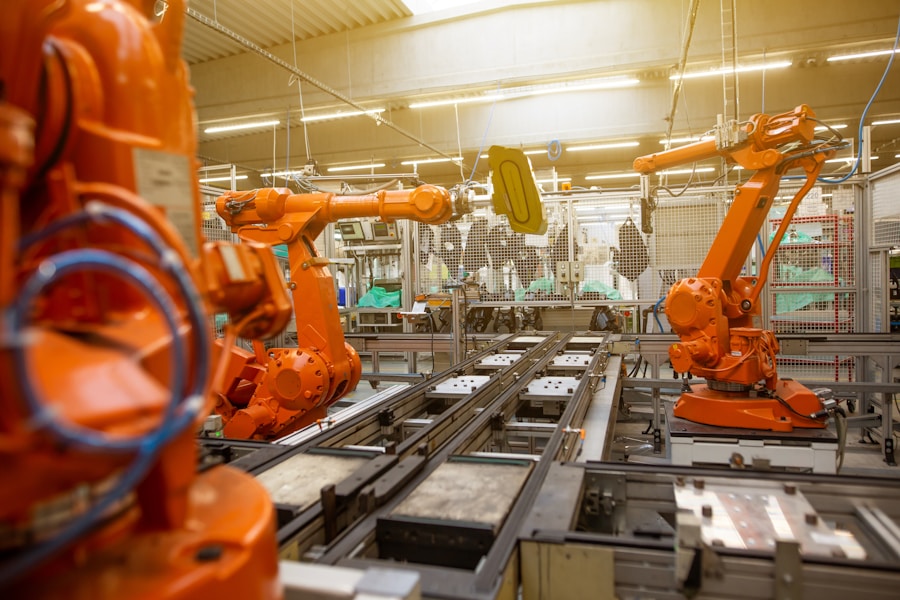
Previously, many производственный processes relied heavily on manual labor. Automation, through industrial robots and sophisticated machinery, now manages assembly lines, quality control, and packaging with increased speed and precision. This shift is not merely about replacing hands with machines; it’s about fundamentally altering the rhythm and structure of production.
Within logistics, automated warehouses utilize robotic systems for inventory management, picking, and sorting. Drones and autonomous vehicles are also emerging as tools for delivery services, potentially reducing transportation times and costs. This evolution creates a complex interplay between human oversight and automated execution, where the human role often shifts to monitoring, maintenance, and strategic planning.
Redefining Service Sectors
The service industry, traditionally human-centric, is experiencing its own wave of automation. Customer service, for example, frequently incorporates chatbots and AI-powered virtual assistants. These tools handle routine inquiries, often providing instant responses and freeing human agents to address more intricate or sensitive customer needs.
In healthcare, automated systems assist with diagnostic processes, drug dispensing, and even surgical procedures. While these systems augment human capabilities, they also necessitate a re-evaluation of ethical considerations and the precise division of labor between human and machine. Similarly, in finance, automated trading platforms and algorithmic analysis tools increasingly manage investment portfolios and detect fraudulent activities, transforming the roles of financial advisors and analysts.
The Evolution of Skill Sets
As automation permeates various workplaces, the demand for specific human skills changes. Repetitive manual tasks are often automated, while skills such as critical thinking, creativity, and emotional intelligence become more valuable. This shift necessitates ongoing education and training programs to equip individuals with the competencies required for an evolving job market. Adaptability emerges as a key attribute for navigating these changes.
Automation in Daily Life
Beyond the professional sphere, automation is increasingly woven into the fabric of everyday existence, influencing domestic routines, transportation, and personal interactions.
Smart Homes and Connected Devices
The concept of the “smart home” illustrates automation’s pervasive reach into personal spaces. Devices such as smart thermostats, lighting systems, and security cameras can be automated and remotely controlled, offering convenience and energy efficiency. These systems collect data on user habits, which can then be used to optimize their performance, creating an adaptive living environment.
Voice assistants have also become commonplace, enabling hands-free control over various devices and providing instant access to information. While these technologies offer convenience, they also raise questions about data privacy and the potential for a diminished need for direct human interaction in certain contexts.
Transforming Transportation
The automotive industry is a prominent arena for automation’s impact. Advanced Driver-Assistance Systems (ADAS), such as adaptive cruise control, lane-keeping assist, and automatic emergency braking, are becoming standard features in new vehicles. These technologies aim to enhance safety and reduce driver fatigue.
The development of fully autonomous vehicles represents a more radical transformation. While still in testing phases and facing regulatory challenges, their widespread adoption could fundamentally alter urban planning, public transport systems, and individual mobility. This shift implies a reconsideration of infrastructure, legal frameworks, and societal norms around travel.
Personal Assistants and Algorithmic Recommendations
AI-powered personal assistants schedule appointments, manage tasks, and provide personalized information. Recommendation algorithms, embedded in streaming services, e-commerce platforms, and social media, curate content and products based on user preferences. While these systems enhance user experience and efficiency, they also influence choices and create filter bubbles, potentially limiting exposure to diverse perspectives.
Societal and Economic Implications
The widespread adoption of automation has broad societal and economic consequences, impacting labor markets, income distribution, and ethical considerations.
Labor Market Dynamics
Automation’s impact on labor markets is a complex and often debated topic. While some jobs are at risk of automation, new roles frequently emerge, particularly in areas related to the development, maintenance, and oversight of automated systems. The nature of work is changing, favoring skills that complement AI and robotics.
Displacement effects, where automation replaces human labor, can lead to unemployment in certain sectors. However, increased productivity and economic growth driven by automation can also create new opportunities and industries. The net effect on employment is not uniformly negative or positive, but rather a dynamic interplay requiring proactive policy responses, such as retraining initiatives and social safety nets.
Income Inequality
The economic benefits of automation are not always evenly distributed. Capital owners and highly skilled individuals who develop or manage automated systems may disproportionately benefit, potentially exacerbating income inequality. This phenomenon can lead to social tensions if not addressed through mechanisms that promote broader participation in the economic gains generated by increased productivity.
Policies such as universal basic income or robust social welfare programs are often discussed as potential interventions to mitigate the adverse effects of automation on income distribution. These discussions reflect a growing awareness of the need for societal adjustments as technological progress continues.
Ethical Considerations and Bias
Automated systems, particularly those incorporating artificial intelligence, raise numerous ethical questions. Bias embedded in training data can lead to discriminatory outcomes, for example, in hiring algorithms or loan applications. Ensuring fairness and transparency in AI systems is paramount.
Additionally, the increasing autonomy of machines necessitates robust discussions about accountability. When an automated system makes a decision with significant consequences, establishing responsibility becomes a critical legal and ethical challenge. The development of ethical guidelines and regulatory frameworks is a continuous process in response to these evolving concerns.
Challenges and Opportunities for Individuals
The automation revolution presents individuals with both significant challenges and transformative opportunities. Navigating this landscape requires foresight and adaptability.
Lifelong Learning and Reskilling
The rapid pace of technological change means that skills acquired early in a career may quickly become obsolete. Lifelong learning, therefore, is no longer a luxury but a fundamental necessity. Individuals must continuously update their skill sets, focusing on areas that are less prone to automation, such as critical thinking, complex problem-solving, creativity, and interpersonal communication.
Governments, educational institutions, and employers have a shared responsibility to provide accessible and effective reskilling programs. Without such initiatives, segments of the workforce risk being left behind, creating societal fragmentation.
Adapting to New Work Structures
The traditional employer-employee relationship is evolving. The rise of the gig economy, facilitated by automated platforms, offers flexibility but can also entail precarity. Individuals may need to become more entrepreneurial, managing multiple roles or projects.
The increasing prevalence of remote work, often enabled by automated communication and collaboration tools, also demands new approaches to self-management and work-life balance. Adapting to these new structures requires individual initiative and resilience.
Leveraging Automation for Personal Growth
Beyond job displacement, automation offers individuals tools for personal empowerment. Automated learning platforms can provide personalized education, and AI-powered tools can assist with creativity, data analysis, and decision-making.
By understanding how automation works, you can become a more informed participant in this evolving technological landscape. Rather than perceiving automation solely as a threat, considering it as a sophisticated tool can unlock new avenues for individual expression, productivity, and personal development. The key lies in strategic engagement with these tools, turning what might be seen as a constraint into a catalyst for progress.
The Future Trajectory of Automation
Predicting the precise future of automation is complex, yet clear trends and ongoing developments suggest certain trajectories. The interaction between human ingenuity and machine capability will define the forthcoming stages.
Human-Robot Collaboration
The future is unlikely to be one of pure machine dominance or human stasis. Instead, a trend toward closer human-robot collaboration is emerging. This involves robots working alongside humans in manufacturing, healthcare, and other settings, augmenting human strength, precision, or analytical capabilities. This symbiotic relationship, where each partner brings unique strengths, aims to optimize outcomes and create more dynamic work environments.
Consider a surgeon assisted by a robotic arm for intricate procedures, or a warehouse worker directing a fleet of automated guided vehicles. In these scenarios, the machine component extends human capacity, rather than replacing it entirely. This requires new forms of training and interface design, fostering intuitive interaction between humans and their automated counterparts.
Advances in Artificial General Intelligence (AGI)
While current AI is primarily narrow AI, excelling at specific tasks, research into Artificial General Intelligence (AGI) continues. AGI, if achieved, would possess cognitive abilities akin to humans, capable of learning, understanding, and applying knowledge across a wide range of tasks. The implications of achieving AGI are profound, potentially revolutionizing every aspect of human life. However, AGI remains a theoretical concept with significant technical hurdles.
The development path for AGI is uncertain, and its potential impact is a subject of extensive philosophical and scientific debate. It challenges fundamental understandings of intelligence, consciousness, and the very nature of human existence. The ethical frameworks for such an intelligence would need to be meticulously developed in parallel with its technical advancement.
Regulatory and Policy Adjustments
As automation advances, governments and international bodies will continue to grapple with the need for appropriate regulation and policy adjustments. This includes crafting legislation to address data privacy, algorithmic bias, job displacement, and the ethical use of autonomous systems. The challenge lies in creating frameworks that foster innovation while protecting individuals and society from potential harms.
For example, policies around autonomous vehicles require clear liability rules. Regulations for AI in healthcare must balance therapeutic benefits with patient safety and data security. The continuous development of automation necessitates an equally dynamic and adaptive approach to governance, creating a flexible regulatory ecosystem that can evolve with the technology. This is a constant balancing act between fostering technological progress and ensuring societal well-being.