
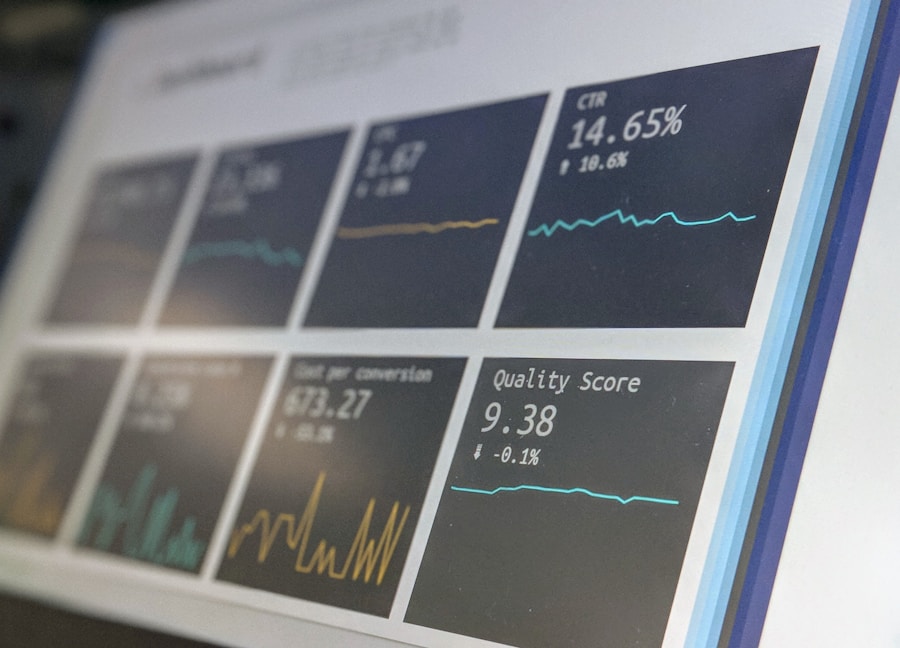
The process of making informed decisions is a cornerstone of effective action, whether in personal life, professional settings, or organizational strategy. This guide explores how to systematically leverage insights to navigate complexity and arrive at more robust conclusions. Rather than relying on gut feelings alone, which can be akin to sailing without a compass, this approach emphasizes the deliberate collection, analysis, and application of relevant information.
Understanding the Landscape: Defining Insights
For the purposes of this discussion, an “insight” is not merely raw data, but rather a deeper understanding or realization gained from examining data, observations, or experiences. It represents a shift in perspective, revealing underlying patterns, motivations, or causal relationships that were not immediately apparent. Think of it as finding the hidden currents beneath the surface of the ocean; they dictate the true direction of travel.
Differentiating Data, Information, and Insights
It is crucial to distinguish between these terms to establish a clear foundation.
Data
Data comprises raw, unorganized facts and figures. Examples include sales figures, website traffic logs, survey responses, or sensor readings. Without context or processing, data offers little inherent meaning.
Information
Information is data that has been organized, structured, and given context. For instance, a sales report showing total revenue for a quarter is information derived from individual sales transactions. Information answers questions like “what” and “how much.”
Insights
Insights are the “why” and “so what.” They are processed information that leads to a deeper understanding, revealing latent connections or implications. An insight might be, for example, understanding why sales are declining in a particular region, or identifying that specific customer demographics are demonstrating a trend towards a competitor’s product. Insights are actionable, hinting at potential solutions or new strategies.
The Value Proposition of Insight
The value of insights lies in their ability to reduce uncertainty and increase predictability. By understanding the drivers of a situation, decision-makers can anticipate outcomes with greater accuracy. This foresight allows for proactive rather than reactive strategies, leading to more efficient resource allocation and a reduced likelihood of costly errors.
Identifying Potential Sources of Insights
Insights can originate from a wide array of sources.
Internal Data and Analytics
This includes historical performance data, customer relationship management (CRM) data, financial records, and operational metrics. Analyzing these internal sources provides a mirror reflecting the organization’s own performance and behaviors.
External Market Research
Gathering information on industry trends, competitor activities, economic indicators, and consumer behavior provides an external perspective. This helps to understand the broader environment in which decisions are made.
Stakeholder Feedback
Direct input from customers, employees, partners, and other stakeholders can offer invaluable qualitative insights into their needs, perceptions, and experiences. This is akin to listening to the voices of those living within the ecosystem.
Expert Knowledge and Experience
Subject matter experts, seasoned professionals, and individuals with deep domain knowledge possess a wealth of implicitly understood information that can translate into powerful insights.
The Framework for Insight Generation
Developing a robust process for generating insights requires a structured approach, rather than a haphazard collection of observations. This framework outlines the key steps involved.
Phase 1: Problem Definition and Objective Setting
Before embarking on any insight-gathering mission, clarity on the problem to be solved or the decision to be made is paramount. Without a clear destination, any journey is likely to be aimless.
Articulating the Decision Context
What specific question needs answering? What is the scope of the decision? Understanding the boundaries and the intended impact is the first step.
Defining Key Performance Indicators (KPIs)
What metrics will be used to evaluate the success of the decision? Identifying these upfront ensures that the insights gathered are relevant to the desired outcomes.
Hypothesis Generation
Based on initial understanding, formulate tentative assumptions or hypotheses that can be tested through the insight generation process.
Phase 2: Data Collection and Curation
This phase involves systematically gathering the necessary raw material for analysis.
Identifying Relevant Data Sets
Determine which data sources are most likely to contain the answers to the defined questions.
Establishing Data Collection Methodologies
Employ appropriate methods, such as surveys, interviews, observational studies, data scraping, or API integrations.
Data Cleaning and Preprocessing
Raw data is often messy. This step involves identifying and correcting errors, handling missing values, and transforming data into a usable format. This is like sifting through sand to find the precious gems.
Phase 3: Analysis and Pattern Identification
This is where raw data and structured information begin to transform into meaningful understanding.
Exploratory Data Analysis (EDA)
Utilize statistical techniques and visualization tools to explore the data, identify trends, outliers, and potential relationships.
Statistical Modeling
Employ statistical models to quantify relationships, test hypotheses, and make predictions.
Qualitative Analysis Techniques
For non-numerical data, employ methods like thematic analysis, content analysis, or sentiment analysis to extract meaning.
Identifying Anomalies and Outliers
Deviations from the norm can often be the most insightful data points, pointing to unique circumstances or emerging trends.
Phase 4: Insight Synthesis and Interpretation
Transforming analytical findings into coherent and actionable insights.
Connecting the Dots
Synthesizing findings from various analyses to form a holistic understanding. This is akin to assembling a jigsaw puzzle, where each piece contributes to the larger picture.
Identifying Root Causes
Moving beyond correlation to understand the underlying factors driving observed phenomena.
Formulating Actionable Recommendations
Translating insights into concrete suggestions for decision-making.
Tools and Techniques for Insight Generation
A variety of analytical tools and methodologies can significantly enhance the process of generating insights. The choice of tools often depends on the nature of the data and the complexity of the problem.
Quantitative Analysis Tools
These tools are designed for numerical data.
Spreadsheet Software
Basic analysis, data organization, and simple visualizations can be achieved with tools like Microsoft Excel or Google Sheets.
Statistical Software Packages
For more advanced statistical analysis, packages such as R, Python (with libraries like SciPy, NumPy, and Pandas), SPSS, or SAS are commonly used. These allow for complex modeling and hypothesis testing.
Business Intelligence (BI) Platforms
Tools like Tableau, Power BI, or Qlik provide interactive dashboards and reporting capabilities, enabling users to explore data visually and identify trends.
Qualitative Analysis Tools
These tools are geared towards understanding non-numerical data.
Survey Platforms
Online survey tools allow for the systematic collection of qualitative responses from a large number of participants.
Text Analysis Software
Tools and techniques for analyzing large volumes of text, such as word clouds, topic modeling, or sentiment analysis, can reveal patterns in qualitative feedback.
Focus Group and Interview Analysis Tools
Software can assist in transcribing, coding, and identifying themes within qualitative discussions.
Advanced Analytical Techniques
For more complex challenges, advanced methods may be necessary.
Machine Learning Algorithms
Techniques like clustering, classification, and regression can uncover hidden patterns and make predictions by learning from data.
Predictive Modeling
Building models to forecast future outcomes based on historical data. This can be a powerful tool for anticipating market shifts or customer behavior.
A/B Testing and Experimentation
This methodology facilitates direct comparison between different approaches or variations to understand which performs better, thereby yielding direct insights into effectiveness.
The Application of Insights in Decision Making
Generating insights is only the first half of the equation. The true value is realized when these insights are effectively integrated into the decision-making process.
Integrating Insights into Decision Frameworks
Insights should not be an afterthought but an intrinsic part of the decision-making architecture.
Scenario Planning
Using insights to develop plausible future scenarios and to assess the potential impact of decisions under different conditions.
Risk Assessment
Leveraging insights to identify potential risks associated with a decision and to develop mitigation strategies. This is like having a weather forecast before setting sail.
Strategy Formulation
Informing the development of strategic plans by providing a data-driven understanding of market dynamics, customer needs, and competitive landscapes.
Communicating Insights Effectively
The impact of insights can be diminished if they are not communicated clearly and persuasively to relevant stakeholders.
Visual Communication
Utilizing charts, graphs, and dashboards to present complex data and insights in an understandable format.
Storytelling with Data
Crafting narratives that weave together data, analysis, and insights to create a compelling case for action.
Tailoring the Message
Adjusting the level of detail and technicality based on the audience’s expertise and needs.
The Iterative Nature of Insight and Decision
The process of making informed decisions is rarely linear. Insights gained from one decision can lead to new questions and further insight generation.
Feedback Loops
Establishing mechanisms to gather feedback on the outcomes of decisions, which can then be used to refine future insight generation.
Continuous Improvement
Treating the entire process as an ongoing cycle of learning, adaptation, and refinement. This is akin to a ship constantly adjusting its sails to catch the most favorable winds.
Challenges and Mitigation Strategies
While the pursuit of insights is highly beneficial, it is not without its challenges. Recognizing these hurdles in advance can help in developing effective mitigation strategies.
Data Quality Issues
Inaccurate, incomplete, or inconsistent data can lead to flawed insights.
Mitigation
Implement robust data governance policies, invest in data validation tools, and conduct thorough data cleaning procedures.
Bias in Data and Analysis
Human biases or systematic errors in data collection and analysis can skew results.
Mitigation
Employ diverse teams in the analysis process, use objective criteria for evaluation, and be aware of common cognitive biases. Employing blind review processes can also be beneficial.
Over-reliance on Data
Neglecting qualitative factors, expert judgment, or ethical considerations in favor of purely quantitative data.
Mitigation
Ensure a balanced approach that integrates both quantitative and qualitative data, alongside human expertise and ethical frameworks. Do not become so focused on the numbers that you forget the human element.
Resistance to Change
Stakeholders may resist adopting decisions based on new insights if they are comfortable with existing practices.
Mitigation
Involve stakeholders early in the process, clearly communicate the rationale behind the insights and recommendations, and demonstrate the tangible benefits of the proposed changes.
The Ethical Dimensions of Insight Utilization
As the power to extract and utilize insights grows, so does the responsibility to do so ethically.
Privacy Concerns
The collection and analysis of personal data raise significant privacy issues.
Mitigation
Adhere to all relevant data protection regulations (e.g., GDPR, CCPA), anonymize data where possible, and obtain informed consent from individuals. Transparency in data usage is key.
Transparency in Algorithmic Decision-Making
When algorithms are used to generate insights or drive decisions, their workings should be understandable.
Mitigation
Strive for explainable AI (XAI) where feasible, and clearly communicate the role and limitations of algorithmic inputs in decision-making processes. Avoid making decisions based on “black box” logic.
Avoiding Manipulation
Insights should be used to facilitate better understanding and decision-making, not to manipulate individuals or groups.
Mitigation
Establish clear ethical guidelines for data analysis and insight application, and foster a culture of integrity within the organization. The objective is illumination, not deception.
By systematically approaching the generation and application of insights, individuals and organizations can move beyond reactive problem-solving to a proactive stance, navigating the complexities of their environments with greater clarity and confidence. This deliberate process, when executed thoughtfully, transforms raw observations into the informed decisions that drive progress.