
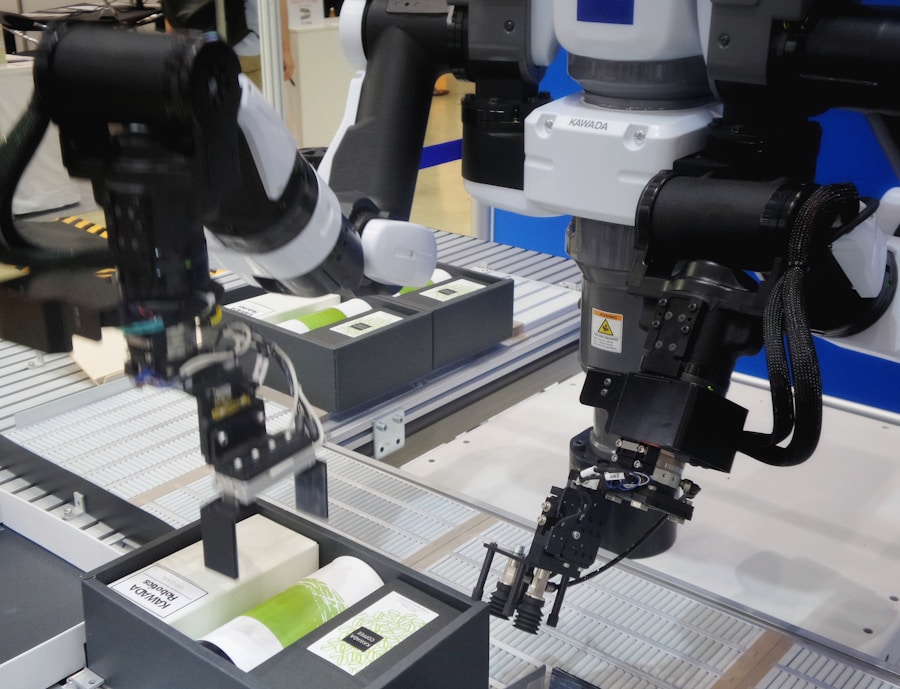
Automation has become increasingly prevalent in various industries, revolutionizing the way work is done. From manufacturing and logistics to healthcare and finance, automation has transformed the way tasks are completed, leading to increased efficiency and productivity. In manufacturing, for example, robots and automated assembly lines have streamlined production processes, leading to higher output and lower costs. In the healthcare industry, automation has improved patient care through the use of electronic health records and robotic surgery. Even in the financial sector, automation has revolutionized the way transactions are processed and analyzed, leading to faster and more accurate decision-making.
The rise of automation can be attributed to advancements in technology, particularly in the fields of robotics, artificial intelligence, and machine learning. These technologies have enabled the development of sophisticated automation systems that can perform complex tasks with minimal human intervention. As a result, businesses across various industries have embraced automation as a means to stay competitive in an increasingly globalized and fast-paced market. With the potential to reduce human error, increase productivity, and lower costs, it is no wonder that automation has become a key driver of innovation in today’s workplace.
The Impact of Automation on Job Roles and Employment
The widespread adoption of automation has had a profound impact on job roles and employment across various industries. While automation has led to the creation of new job opportunities in fields such as robotics engineering and data analysis, it has also resulted in the displacement of certain traditional roles. For example, in manufacturing, the use of robots and automated assembly lines has reduced the need for manual labor, leading to job losses for some workers. Similarly, in the financial sector, the automation of transaction processing and data analysis has led to a decrease in the demand for certain administrative roles.
The impact of automation on employment has also been felt in the service industry, where tasks such as customer service and data entry have been automated through the use of chatbots and data management systems. While these advancements have led to increased efficiency and cost savings for businesses, they have also raised concerns about the potential loss of jobs for workers in these sectors. As automation continues to advance, it is crucial for businesses and policymakers to consider the implications for the workforce and develop strategies to mitigate the potential negative impact on employment.
The Advantages and Disadvantages of Automation in the Workplace
The rise of automation in the workplace has brought about a range of advantages and disadvantages for businesses and workers alike. On one hand, automation has led to increased efficiency and productivity, as tasks that were once performed manually can now be completed at a much faster pace with minimal human intervention. This has allowed businesses to reduce costs and improve their competitiveness in the market. Additionally, automation has also improved safety in certain industries by taking over hazardous tasks that were previously performed by humans.
However, the widespread adoption of automation has also raised concerns about its potential negative impact on the workforce. As tasks become automated, there is a risk of job displacement for workers who are no longer needed to perform these tasks. This can lead to unemployment and economic hardship for those affected. Furthermore, there are concerns about the potential dehumanization of the workplace as more tasks become automated, leading to a loss of human interaction and creativity in certain roles. It is important for businesses to carefully consider the advantages and disadvantages of automation in order to make informed decisions about its implementation in the workplace.
How Automation is Changing the Skills and Education Required for the Future Workforce
The rise of automation has led to a shift in the skills and education required for the future workforce. As tasks become increasingly automated, there is a growing demand for workers with skills in areas such as robotics engineering, data analysis, and programming. These skills are essential for developing and maintaining automation systems, as well as for analyzing and interpreting the data generated by these systems. In addition, there is a growing need for workers with strong critical thinking and problem-solving skills, as these are essential for identifying opportunities for automation and optimizing existing processes.
Furthermore, as automation continues to advance, there is a growing demand for workers with strong interpersonal and communication skills. While certain tasks may become automated, there will always be a need for human interaction in roles such as customer service and management. As a result, workers who possess strong communication skills and emotional intelligence will be highly sought after in the future workforce. In order to adapt to these changes, it is crucial for educational institutions to evolve their curricula to ensure that students are equipped with the skills needed to thrive in an increasingly automated workplace.
The Role of Artificial Intelligence and Machine Learning in Automation
Artificial intelligence (AI) and machine learning have played a crucial role in driving the advancement of automation in various industries. AI technologies such as natural language processing and computer vision have enabled the development of sophisticated automation systems that can perform complex tasks with minimal human intervention. For example, in manufacturing, AI-powered robots can analyze data from sensors to optimize production processes and identify potential issues before they occur. In healthcare, machine learning algorithms can analyze medical images to assist with diagnosis and treatment planning.
Furthermore, AI and machine learning have also played a key role in enabling predictive maintenance in industries such as transportation and energy. By analyzing data from sensors and equipment, AI systems can predict when maintenance is needed, reducing downtime and improving operational efficiency. As AI continues to advance, it is expected that its role in driving automation will only continue to grow, leading to further improvements in efficiency and productivity across various industries.
The Ethical and Social Implications of Automation in the Workplace
The rise of automation in the workplace has raised a range of ethical and social implications that must be carefully considered by businesses and policymakers. One of the key ethical concerns surrounding automation is the potential loss of jobs for workers whose roles become automated. This can lead to economic hardship for those affected, as well as social unrest if not addressed properly. Furthermore, there are concerns about the potential dehumanization of the workplace as more tasks become automated, leading to a loss of human interaction and creativity in certain roles.
In addition, there are ethical considerations surrounding the use of AI and machine learning in driving automation. For example, there are concerns about bias in AI algorithms that could lead to discriminatory outcomes in areas such as hiring and lending decisions. It is crucial for businesses to carefully consider these ethical implications when implementing automation systems in order to ensure that they are used responsibly and ethically.
Strategies for Adapting to the Changing Landscape of Work due to Automation
As automation continues to transform the workplace, it is crucial for businesses and workers to adapt to these changes in order to thrive in an increasingly automated environment. One key strategy for adapting to automation is investing in continuous learning and upskilling. By acquiring new skills in areas such as data analysis, programming, and interpersonal communication, workers can position themselves for success in an automated workplace. Additionally, businesses can invest in training programs to ensure that their workforce is equipped with the skills needed to thrive in an increasingly automated environment.
Furthermore, businesses can also explore opportunities for reimagining job roles in light of automation. Rather than viewing automation as a threat to jobs, businesses can identify opportunities for workers to take on new responsibilities that leverage their unique human skills such as creativity, emotional intelligence, and problem-solving. By reimagining job roles in this way, businesses can create a more fulfilling work environment that leverages both human and automated capabilities.
In conclusion, the rise of automation has had a profound impact on various industries, leading to increased efficiency and productivity while also raising concerns about job displacement and ethical implications. As automation continues to advance, it is crucial for businesses and workers to adapt to these changes by investing in continuous learning, reimagining job roles, and carefully considering the ethical implications of automation systems. By doing so, businesses can ensure that they are well-positioned to thrive in an increasingly automated workplace while also addressing potential negative impacts on workers and society as a whole.