
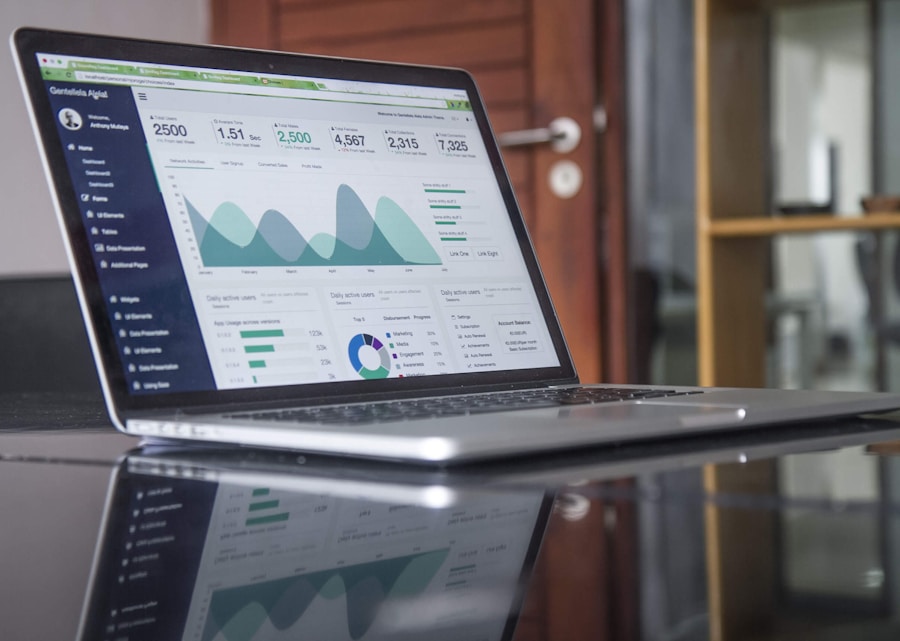
Analytics is the process of analyzing data to gain insights and make informed decisions. It involves the use of statistical analysis, predictive modeling, and machine learning to uncover patterns, trends, and relationships within the data. In today’s data-driven world, analytics has become an essential tool for businesses to understand their customers, optimize their operations, and drive growth.
There are various types of analytics, including descriptive, diagnostic, predictive, and prescriptive analytics. Descriptive analytics focuses on summarizing historical data to understand what has happened in the past. Diagnostic analytics seeks to identify the reasons behind certain outcomes or trends. Predictive analytics uses historical data to forecast future events or behaviors. Prescriptive analytics goes a step further by recommending actions to optimize outcomes based on predictive models.
Understanding the Data
Before implementing analytics in business, it is crucial to understand the data that will be analyzed. This involves identifying the sources of data, collecting and organizing the data, and ensuring its quality and accuracy. Data can come from various sources, including customer transactions, social media interactions, website traffic, and operational systems.
Once the data is collected, it needs to be organized and prepared for analysis. This may involve cleaning the data to remove errors or inconsistencies, transforming the data into a format suitable for analysis, and integrating data from different sources. Data quality is also important, as inaccurate or incomplete data can lead to misleading insights and decisions.
In addition to understanding the data itself, it is important to consider the ethical and legal implications of using data for analytics. This includes ensuring compliance with data privacy regulations, protecting sensitive information, and being transparent about how data is used and analyzed.
Implementing Analytics in Business
Implementing analytics in business involves selecting the right tools and technologies, building the necessary infrastructure, and developing the skills and capabilities required for effective analysis. There are various analytics tools available, ranging from simple spreadsheet software to advanced data visualization and machine learning platforms.
Building the infrastructure for analytics involves setting up databases, data warehouses, and data lakes to store and manage large volumes of data. This may also involve implementing cloud-based solutions for scalability and flexibility. Developing the skills and capabilities for analytics requires training employees in data analysis, statistics, and programming, as well as fostering a culture of data-driven decision making within the organization.
In addition to technical considerations, implementing analytics in business also requires a strategic approach. This involves defining clear objectives for analytics, aligning analytics initiatives with business goals, and establishing key performance indicators (KPIs) to measure the impact of analytics on business performance.
Leveraging Analytics for Decision Making
One of the primary benefits of analytics is its ability to support decision making by providing valuable insights and recommendations. By analyzing historical data and predicting future outcomes, analytics can help businesses make more informed decisions in areas such as marketing, sales, operations, and finance.
For example, in marketing, analytics can be used to identify customer segments with the highest potential for conversion, optimize advertising campaigns based on performance data, and personalize messaging to target specific customer preferences. In sales, analytics can help identify cross-selling opportunities, forecast demand for products or services, and optimize pricing strategies based on market trends.
In operations, analytics can be used to optimize supply chain management, improve production efficiency, and reduce waste and costs. In finance, analytics can help identify patterns of fraud or financial risk, forecast cash flow and revenue, and optimize investment decisions.
Measuring Success with Analytics
Measuring the success of analytics initiatives involves tracking key performance indicators (KPIs) related to business objectives and outcomes. This may include metrics such as return on investment (ROI), customer acquisition cost (CAC), customer lifetime value (CLV), conversion rates, and revenue growth.
In addition to quantitative metrics, it is also important to consider qualitative measures of success, such as improved decision making, enhanced customer satisfaction, and increased employee productivity. These measures can provide a more holistic view of the impact of analytics on business performance.
Measuring success with analytics also involves continuous monitoring and evaluation of analytics initiatives to identify areas for improvement and optimization. This may involve conducting A/B testing to compare different approaches, analyzing feedback from stakeholders, and iterating on analytics models and strategies based on real-world results.
Overcoming Challenges with Analytics
While analytics offers significant benefits for businesses, there are also challenges that need to be addressed in order to maximize its effectiveness. One common challenge is the availability and quality of data. Businesses may struggle to access relevant data or may encounter issues with data accuracy or completeness.
Another challenge is the complexity of analytics tools and technologies. Implementing advanced analytics capabilities such as machine learning or artificial intelligence may require specialized skills and expertise that are not readily available within the organization.
In addition to technical challenges, there are also organizational and cultural barriers to overcome when implementing analytics in business. This may include resistance to change, lack of buy-in from key stakeholders, or siloed data and decision-making processes within the organization.
The Future of Analytics in Business
The future of analytics in business is likely to be shaped by advancements in technology, changes in consumer behavior, and evolving regulatory landscapes. As technology continues to advance, businesses will have access to more powerful analytics tools and platforms that enable deeper insights and more accurate predictions.
The rise of big data and the Internet of Things (IoT) will also create new opportunities for businesses to collect and analyze vast amounts of data from diverse sources. This will enable more comprehensive and real-time insights into customer behavior, market trends, and operational performance.
At the same time, businesses will need to navigate evolving regulations around data privacy and security. This may require investments in compliance measures and ethical frameworks for using data in analytics.
Overall, the future of analytics in business holds great promise for driving innovation, improving decision making, and delivering value to customers. By embracing analytics as a strategic imperative, businesses can position themselves for success in an increasingly competitive and data-driven marketplace.