
Introduction
This article outlines how an organization can leverage metrics to foster business expansion. It details the process of identifying, tracking, and analyzing key performance indicators (KPIs) to inform strategic decisions and optimize operational efficiency. The text provides a framework for integrating data-driven insights into business practices, emphasizing a systematic approach to growth.
Understanding the Landscape of Metrics
Metrics serve as the compass guiding a business through the complex terrain of the market. Without them, decisions are often based on intuition or conjecture, akin to sailing without a map. Understanding the different types of metrics and their application is fundamental to their effective use.
Defining Key Performance Indicators (KPIs)
KPIs are quantifiable measures used to evaluate the success of an organization, employee, or project in meeting objectives. They are specific, measurable, achievable, relevant, and time-bound (SMART). The selection of KPIs is critical; they should directly align with the overarching business goals. For instance, a software company might track customer acquisition cost (CAC) and customer lifetime value (CLTV) to understand the efficiency of its sales and marketing efforts. A retail business might focus on average transaction value and inventory turnover.
Differentiating Leading and Lagging Indicators
Leading indicators are predictive; they forecast future performance. Examples include website traffic, sales pipeline velocity, or employee training hours. Lagging indicators, conversely, measure past performance. Revenue, profit margins, and customer churn rate are classic examples. A balanced approach involves tracking both. Leading indicators act as an early warning system, allowing for course correction before lagging indicators reflect a negative trend. Consider them as the difference between watching the weather forecast (leading) and looking at the flooded street outside (lagging).
Establishing Baselines and Benchmarks
Before metrics can be truly informative, it is necessary to establish baselines. A baseline is a starting point, a measure of current performance against which future performance can be compared. For example, if a business aims to reduce customer support response times, the current average response time serves as the baseline. Benchmarks, on the other hand, compare performance against industry standards or competitors. This provides external context, revealing areas where the business excels or falls short. Without baselines and benchmarks, metrics are merely numbers without context, like a single puzzle piece without the surrounding image.
Implementing a Data Collection and Analysis Framework
Effective use of metrics hinges on a robust system for data collection and analysis. This framework ensures that data is accurate, consistent, and readily available for interpretation.
Selecting Appropriate Data Sources
Data can originate from various sources, both internal and external. Internal sources include CRM systems, accounting software, website analytics, and operational databases. External sources might involve market research reports, industry benchmarks, or competitive intelligence. The choice of data sources depends on the specific KPIs being monitored. For example, sales performance metrics will primarily draw from CRM data, while market share metrics might require external reports. A diversified portfolio of data sources provides a comprehensive view.
Ensuring Data Quality and Integrity
Garbage in, garbage out. The accuracy and reliability of insights derived from metrics are directly proportional to the quality of the underlying data. Data quality involves completeness, accuracy, consistency, and timeliness. Implementing data validation rules, regular audits, and clear data entry protocols are essential. Inconsistent data can lead to misleading conclusions, much like trying to navigate with a faulty compass.
Utilizing Data Visualization Tools
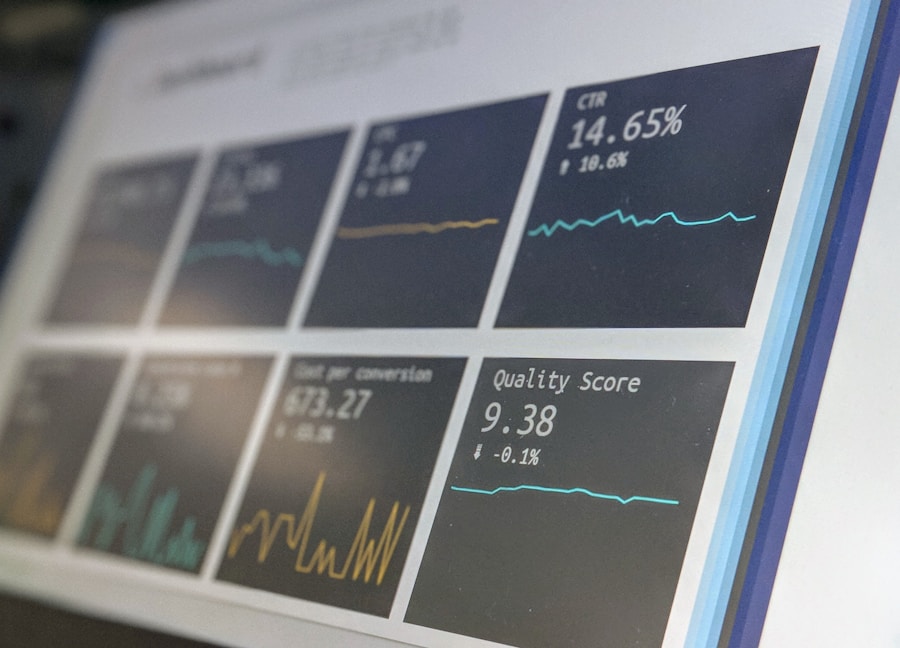
Raw data, especially in large volumes, can be overwhelming and difficult to interpret. Data visualization tools transform complex datasets into digestible formats like charts, graphs, and dashboards. These visual representations reveal trends, patterns, and outliers more readily than spreadsheets alone. Effective data visualization communicates insights quickly, enabling stakeholders to grasp key information without extensive analysis. This transforms data from a dense forest of numbers into a clear, navigable map.
Employing Statistical Analysis Techniques
Beyond simple visualization, statistical analysis can uncover deeper insights. Techniques such as regression analysis can identify relationships between different variables, helping to understand cause and effect. A/B testing allows for the comparison of different strategies to determine which performs better. Predictive analytics can forecast future trends based on historical data. These techniques provide a more rigorous basis for decision-making, moving beyond mere observation to understanding the underlying mechanisms of business performance.
Integrating Metrics into Decision-Making
Metrics are not merely reporting tools; their value lies in their ability to inform and guide strategic and operational decisions. This integration transforms data into actionable intelligence.
Establishing Regular Review Cycles
Metrics should be reviewed regularly, not just sporadically. Weekly, monthly, and quarterly reviews provide structured opportunities to assess performance, identify deviations from targets, and discuss corrective actions. This consistent engagement ensures that metrics remain at the forefront of business operations and prevent issues from festering unnoticed. Regular review cycles are the engine that drives continuous improvement.
Fostering a Data-Driven Culture
For metrics to be truly effective, an organization needs to cultivate a culture where data informs decisions at all levels. This requires transparency, accessibility of data, and training for employees on how to interpret and utilize metrics relevant to their roles. Leadership plays a crucial role in championing this culture, demonstrating how data underpins strategic choices. Without this cultural shift, metrics become isolated figures, like an unused flashlight in the dark.
Linking Metrics to Strategic Objectives
Every metric tracked should ultimately connect back to a larger strategic objective. This ensures that efforts are aligned and that resource allocation is purposeful. For instance, if a strategic objective is to expand into new markets, relevant metrics would include market penetration rate, customer acquisition cost in new territories, and local brand awareness. This direct linkage clarifies the “why” behind each metric and reinforces its importance.
Optimizing Business Processes with Metrics
The continuous monitoring of metrics provides opportunities for ongoing optimization of various business processes. This iterative approach leads to efficiencies and improved outcomes.
Identifying Bottlenecks and Inefficiencies
By tracking process-specific metrics, businesses can pinpoint areas where delays or waste occur. For example, in a manufacturing process, tracking cycle time at various stages can reveal a particular step that acts as a bottleneck. In a customer service department, analyzing call handling times and first-call resolution rates can highlight training needs or procedural flaws. Metrics act as diagnostic tools, illuminating the weak links in the chain of operations.
A/B Testing and Experimentation
Metrics are essential for controlled experimentation. A/B testing, for example, allows businesses to compare two versions of a webpage, marketing email, or product feature to determine which performs better against a defined metric (e.g., click-through rate, conversion rate). This scientific approach to optimization removes guesswork and ensures that improvements are data-backed rather than opinion-driven. It’s akin to having two pathways and using data to determine which one leads to the desired destination more efficiently.
Continuous Improvement Cycles (PDCA)
The Plan-Do-Check-Act (PDCA) cycle, also known as the Deming Cycle, is a fundamental framework for continuous improvement. Metrics are central to the “Check” phase, where performance is evaluated against targets. Based on the findings, adjustments are made in the “Act” phase, leading to a refined plan for the next cycle. This iterative process ensures that optimization is an ongoing activity, not a one-time event. For example, a marketing team might plan a campaign, launch it (Do), track lead generation metrics (Check), and then adjust the campaign based on the results (Act).
Leveraging Advanced Metric Applications
Beyond basic tracking, more sophisticated applications of metrics can provide deeper insights and a competitive edge.
Predictive Analytics for Future Planning
Predictive analytics uses historical data, statistical algorithms, and machine learning techniques to identify the likelihood of future outcomes based on present and past data. This can include forecasting sales, predicting customer churn, or anticipating equipment failures. For instance, an e-commerce company might use predictive analytics to anticipate peak shopping seasons and adjust inventory accordingly. This provides a strategic advantage by allowing proactive rather than reactive decision-making.
Real-time Monitoring and Alerting
For time-sensitive operations, real-time monitoring of key metrics is crucial. Dashboards that update instantaneously and automated alert systems can notify relevant personnel when performance deviates from acceptable thresholds. This is particularly vital in areas like cybersecurity, network performance, or financial trading, where immediate action can prevent significant losses. It’s like having a vigilant guardian constantly watching the pulse of the business.
Integrating Metrics with Artificial Intelligence (AI) and Machine Learning (ML)
AI and ML can augment human analytical capabilities by processing vast amounts of data, identifying subtle patterns, and generating actionable insights that might be missed by human analysts. For example, ML algorithms can personalize customer experiences based on individual behavior metrics, or optimize supply chain logistics by predicting demand fluctuations. This integration transforms raw data into intelligent recommendations and automated actions, pushing the boundaries of what is possible with metrics. The combination of metrics with AI and ML creates a powerful synergy, moving from simply understanding the past and present to shaping the future.
Conclusion
The judicious application of metrics is not merely an analytical exercise; it is an organizational imperative for sustainable growth. By establishing a robust framework for understanding, collecting, analyzing, and applying data, businesses can navigate market complexities with confidence. Metrics serve as an essential toolkit, empowering organizations to make informed decisions, optimize operations, and adapt proactively to change. The consistent integration of data-driven insights cultivates a culture of continuous improvement, paving the way for strategic expansion and lasting success.