
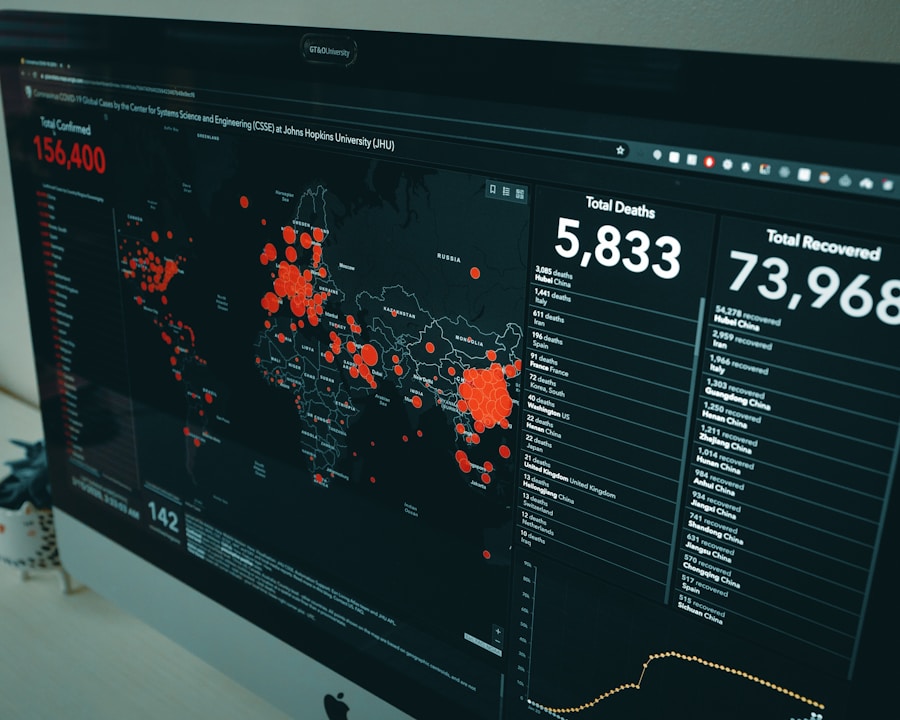
Analytics is the process of analyzing data to gain insights and make informed decisions. It involves the use of statistical and mathematical techniques to interpret data and uncover patterns, trends, and correlations. There are various types of analytics, including descriptive, diagnostic, predictive, and prescriptive analytics. Descriptive analytics focuses on summarizing historical data to understand what has happened in the past. Diagnostic analytics aims to identify the reasons behind certain outcomes or trends. Predictive analytics uses historical data to forecast future events or trends, while prescriptive analytics provides recommendations for actions to achieve desired outcomes.
In today’s digital age, businesses are increasingly relying on analytics to drive decision-making and gain a competitive edge. By leveraging data and analytics, organizations can better understand their customers, optimize their operations, and identify new opportunities for growth. Analytics can also help businesses mitigate risks, improve efficiency, and enhance overall performance. With the rise of big data and advanced technologies, the field of analytics continues to evolve, offering new possibilities for businesses to extract valuable insights from their data.
The Role of Data in Business Transformation
Data plays a crucial role in driving business transformation. In today’s data-driven economy, organizations are inundated with vast amounts of data from various sources, including customer interactions, transactions, social media, and IoT devices. This data holds valuable insights that can be used to drive innovation, improve customer experiences, and optimize business processes. By harnessing the power of data, businesses can gain a deeper understanding of their customers’ needs and preferences, identify market trends, and make more informed decisions.
Business transformation involves reimagining the way an organization operates, with the goal of achieving sustainable growth and competitive advantage. Data-driven transformation enables businesses to adapt to changing market dynamics, improve agility, and drive innovation. By leveraging data analytics, organizations can identify new revenue streams, optimize supply chain operations, and enhance product development. Data also plays a critical role in enabling businesses to personalize their offerings, improve customer engagement, and deliver more targeted marketing campaigns. As businesses continue to embrace digital transformation, data will remain a key driver of innovation and growth.
Leveraging Data for Strategic Decision Making
Data analytics is essential for strategic decision-making in business. By analyzing data, organizations can gain valuable insights that inform their strategic direction and help them achieve their goals. Data-driven decision-making enables businesses to identify opportunities for growth, optimize their operations, and mitigate risks. With the right data and analytics tools, organizations can make more informed decisions that are based on evidence rather than intuition.
Data analytics also enables businesses to measure the impact of their decisions and track their progress towards achieving their strategic objectives. By leveraging data, organizations can monitor key performance indicators (KPIs) and assess the effectiveness of their strategies. This allows businesses to make adjustments as needed and ensure that they are on track to meet their goals. In today’s fast-paced business environment, the ability to make strategic decisions quickly and accurately is essential for staying ahead of the competition. Data analytics provides businesses with the insights they need to make informed decisions that drive success.
Implementing Analytics Tools and Technologies
Implementing analytics tools and technologies is essential for organizations looking to harness the power of data. There are various types of analytics tools available, ranging from basic spreadsheet software to advanced data visualization platforms and machine learning algorithms. The right tools depend on the specific needs and goals of the organization. When implementing analytics tools, it’s important for businesses to consider factors such as data integration capabilities, scalability, ease of use, and security.
In addition to selecting the right tools, organizations must also invest in the necessary infrastructure and resources to support their analytics initiatives. This may include building a data warehouse, implementing data governance processes, and hiring skilled data analysts and data scientists. Organizations should also consider the potential impact on their existing IT systems and ensure that they have the necessary support in place to manage and maintain their analytics infrastructure. By investing in the right tools and technologies, organizations can unlock the full potential of their data and drive meaningful insights that inform their decision-making.
Harnessing the Power of Predictive Analytics
Predictive analytics is a powerful tool for businesses looking to anticipate future trends and outcomes. By analyzing historical data and identifying patterns, predictive analytics enables organizations to forecast future events and make proactive decisions. This can be particularly valuable for businesses looking to optimize their operations, mitigate risks, and capitalize on emerging opportunities. Predictive analytics can be used in various business functions, including sales forecasting, inventory management, risk assessment, and customer segmentation.
To harness the power of predictive analytics, organizations must have access to high-quality data and advanced analytical models. This may involve integrating data from multiple sources, cleaning and preparing the data for analysis, and building predictive models using machine learning algorithms. Organizations must also consider factors such as model accuracy, interpretability, and scalability when implementing predictive analytics solutions. By leveraging predictive analytics, businesses can gain a competitive advantage by making more informed decisions that are based on future trends rather than historical data alone.
Overcoming Challenges in Data Analysis
While data analysis offers numerous benefits for businesses, it also comes with its own set of challenges. One common challenge is the sheer volume of data that organizations must manage and analyze. With the rise of big data, organizations are faced with massive amounts of information that can be overwhelming to process. This requires businesses to invest in scalable infrastructure and advanced analytical tools that can handle large volumes of data efficiently.
Another challenge in data analysis is ensuring the quality and accuracy of the data being analyzed. Poor data quality can lead to inaccurate insights and flawed decision-making. Organizations must implement robust data governance processes to ensure that their data is clean, consistent, and reliable. This may involve establishing data quality standards, implementing data validation processes, and regularly auditing the integrity of the data being used for analysis.
The Future of Data-Driven Business Transformation
The future of business transformation lies in harnessing the power of data to drive innovation and growth. As technology continues to advance, organizations will have access to even more sophisticated analytics tools and technologies that enable them to extract valuable insights from their data. This will empower businesses to make more informed decisions, personalize their offerings, and deliver exceptional customer experiences.
In addition to advanced analytics tools, the future of business transformation will also be shaped by emerging technologies such as artificial intelligence (AI) and machine learning. These technologies have the potential to revolutionize how organizations analyze and leverage their data. AI-powered analytics solutions can automate complex analytical tasks, identify patterns in large datasets, and provide real-time insights that drive strategic decision-making.
As businesses continue to embrace digital transformation, data will remain a key driver of innovation and growth. Organizations that invest in building a strong analytics infrastructure and cultivating a data-driven culture will be well-positioned to thrive in the future economy. By leveraging the power of data analytics, businesses can gain a competitive edge by making more informed decisions that drive success.
In conclusion, analytics plays a critical role in driving business transformation by enabling organizations to gain valuable insights from their data. By leveraging data for strategic decision-making, implementing advanced analytics tools and technologies, harnessing the power of predictive analytics, and overcoming challenges in data analysis, businesses can unlock the full potential of their data and drive meaningful insights that inform their decision-making. The future of business transformation lies in harnessing the power of data to drive innovation and growth through advanced technologies such as AI-powered analytics solutions. Organizations that invest in building a strong analytics infrastructure and cultivating a data-driven culture will be well-positioned to thrive in the future economy.